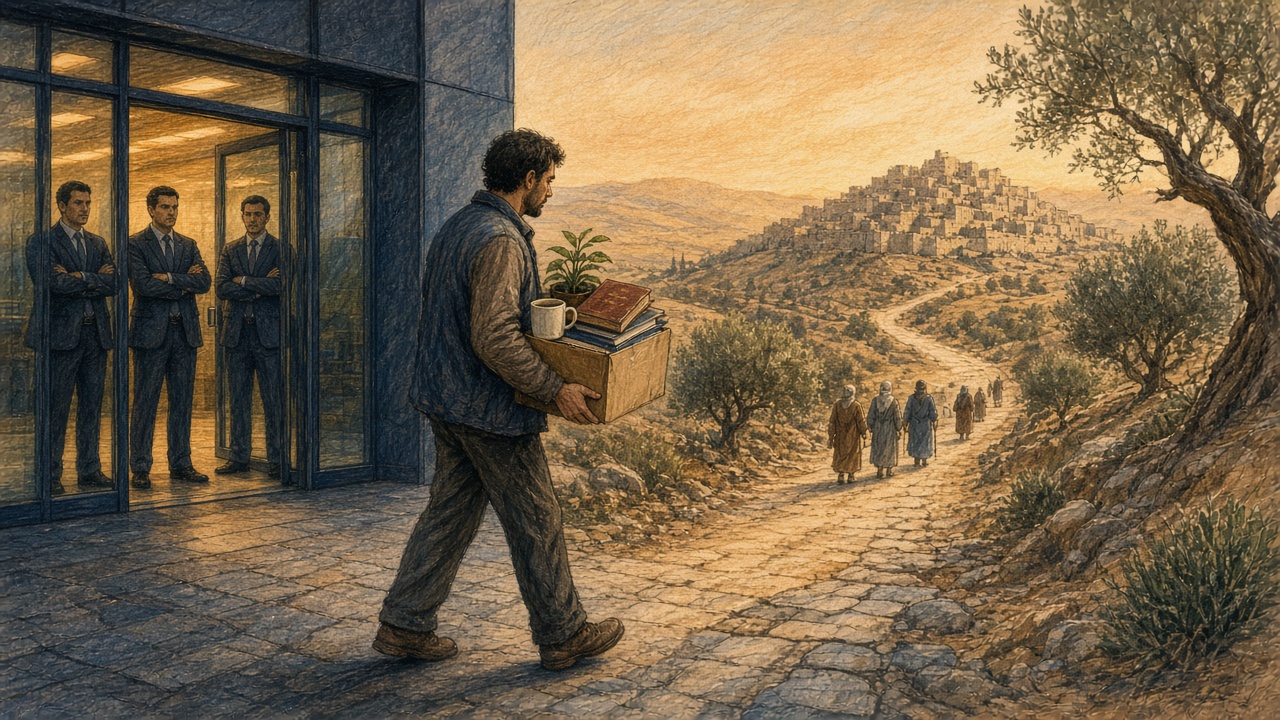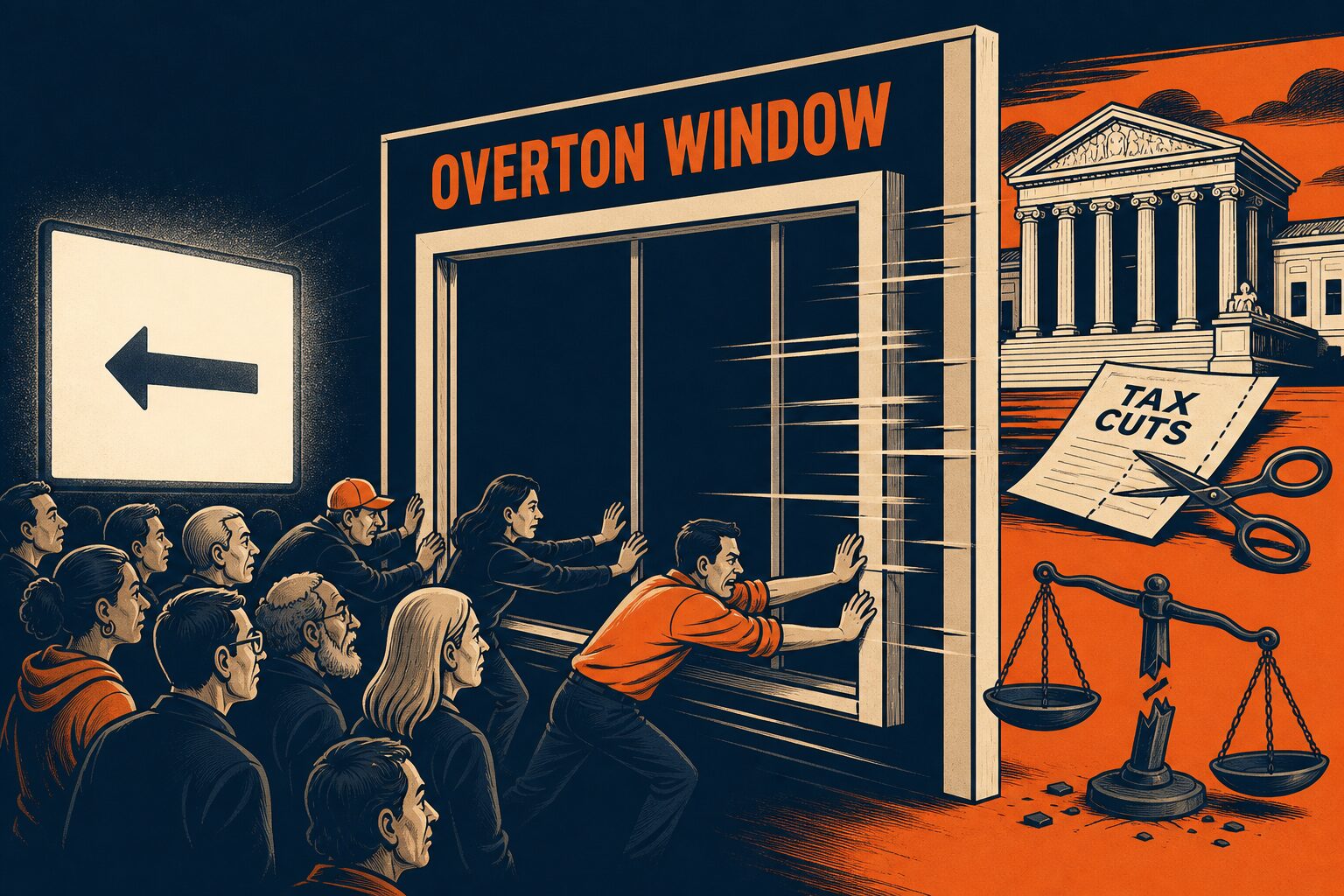
I have been anxious for a long time. Most of it has been about small, human things. Whether there will be enough. Whether I did the thing right. Whether the thing I am dreading tomorrow will be as bad as I have already decided it will be.
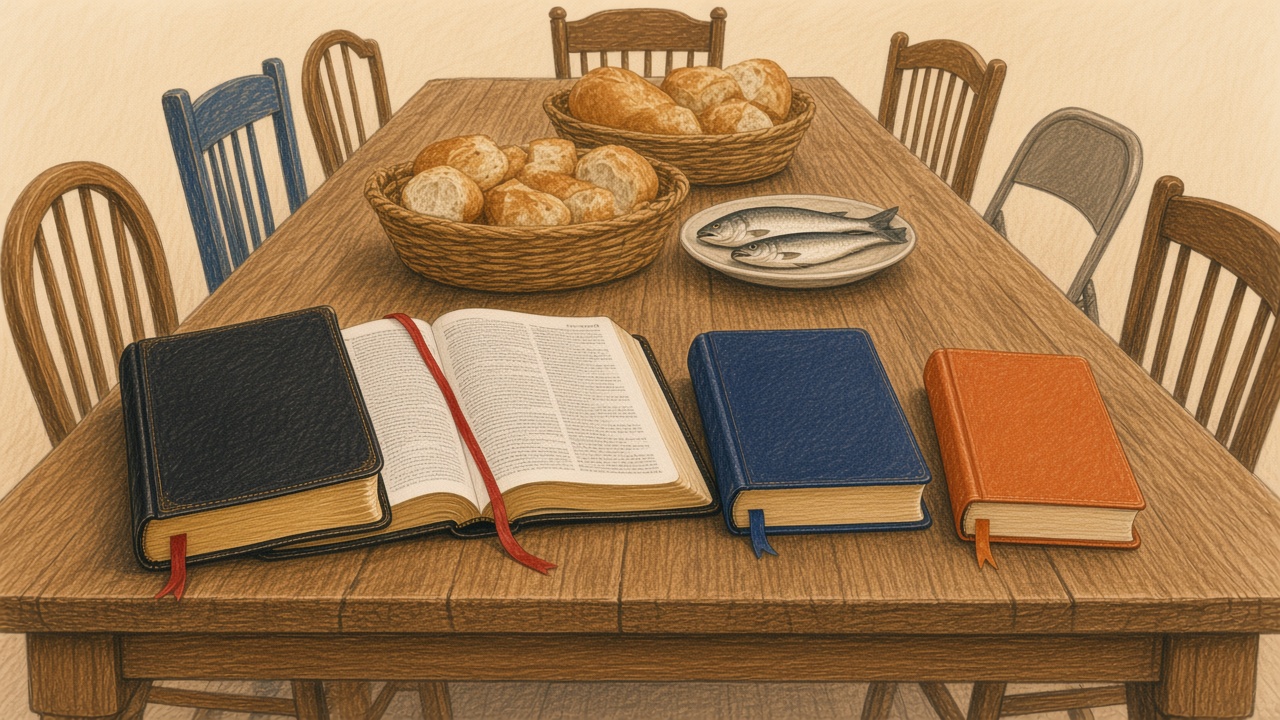
Lately the Gospel of Matthew keeps speaking to me, so I have been reading it in three translations: the New Revised Standard Version Updated Edition, the New International Version, and the King James. Same book, three sets of English, about four hundred years apart.
I see a therapist every week. I have doctors. I take medication. This is not instead of any of that. It is one more thing that is helping.
What it is helping with is narrow. I am learning to trust that I am not the one who has to carry all of it.
Take No Thought
Jesus is not vague about worry. In the Sermon on the Mount he takes it on directly:
Therefore I tell you, do not worry about your life, what you will eat or what you will drink, or about your body, what you will wear. Is not life more than food and the body more than clothing? Look at the birds of the air: they neither sow nor reap nor gather into barns, and yet your heavenly Father feeds them. (Matthew 6:25–26)
Then the lilies of the field, who neither toil nor spin, and still Solomon in all his glory was not dressed like one of them. Then this, which stopped me: “which of you by worrying can add a single hour to your span of life?” (6:27).
None of us. I have tried.
The passage ends on a line I have now read three ways:
Take therefore no thought for the morrow: for the morrow shall take thought for the things of itself. Sufficient unto the day is the evil thereof. (KJV)
Therefore do not worry about tomorrow, for tomorrow will worry about itself. Each day has enough trouble of its own. (NIV)
So do not worry about tomorrow, for tomorrow will bring worries of its own. Today’s trouble is enough for today. (NRSVue)
Four centuries of English, and the instruction does not move.
He does not tell us to stop caring. He tells us where to point it: “seek first the kingdom of God and his righteousness, and all these things will be given to you as well” (6:33). The worry is not deleted. It is redirected.
Seven Baskets
Later in Matthew there is a crowd that has been with Jesus for three days and has nothing to eat. He tells the disciples he does not want to send them away hungry. The disciples ask the question I would have asked:
Where are we to get enough bread in the desert to feed so great a crowd? (Matthew 15:33)
That is the anxious question. It is a question about quantity.
Jesus answers with a different one: “How many loaves have you?” Seven, and a few small fish. He has the crowd sit down on the ground, gives thanks, breaks the bread, and gives it to the disciples, “and the disciples gave them to the crowds” (15:36). Everyone eats and is filled. They pick up the leftovers: seven baskets full.
We are in the same story. The World Food Programme puts it plainly: the world already produces enough food to nourish every person on the planet. And yet the 2026 State of Food Security and Nutrition in the World report estimates that 645 million people faced hunger in 2025. Those two facts can only both be true one way.
We do not have a quantity problem. We have a distribution problem. That’s fixable.
The worry about whether there is enough food is one we built ourselves. God gave us what we need, and Jesus said so. The worry we actually owe is the disciples’ job: getting the bread to the people.
Among the Thorns
There is another side to this that took me longer to see. My worry does not stay inside me.
In the parable of the sower, some seed falls among thorns. Jesus explains it later:
As for what was sown among thorns, this is the one who hears the word, but the cares of this age and the lure of wealth choke the word, and it yields nothing. (Matthew 13:22)
The cares of this age. Not some exotic sin. The ordinary stuff I have spent years on.
And the cost is not only that the plant suffers. It is that it yields nothing. The fruit was never for the plant. It was the good I would have done, the gospel I would have shared, the help my neighbor would have gotten if I had not been tangled up in something that did not matter.
Think about the last time you called someone because you needed them. You hoped they would be at their best when they picked up. Clear-headed, present, able to help. That is the standard Jesus gives: “In everything do to others as you would have them do to you” (7:12). If I want my neighbor at their best when I need them, I owe them mine.
That is part of why the therapist and the doctors and the medication matter. They are not only for me. Being my best for my neighbor does not mean trying harder to stop worrying. It means doing the work.
The Neighbor Who Just Arrived
A lot of our anxiety, I think, comes from not trusting the people around us. If I cannot count on my neighbor, then I have to carry everything myself, and nobody can carry everything.
We have been taught to fear the neighbor in particular, the one who just arrived. We have been told to fear the immigrant. We do not need to. Jesus could not have been clearer about who counts: “You shall love your neighbor as yourself” (22:39). And when he describes the final judgment, one of the measures is “I was a stranger and you welcomed me” (25:35). I wrote about that passage and who it covers in A Bigger Table.
The newcomer is not a threat to the community. The newcomer is more community. More hands, more people playing their part.
Go back to the bread. The disciples did not make it. They did not have to figure out where enough would come from. Their part was to take what was put in their hands and pass it on. If every one of us did our part like that, nobody would be stuck carrying the whole crowd alone, and I think most of us would be far less stressed and better off.
An Open Book Test
None of this is hidden. It is not a puzzle for scholars or a secret for the very devout. Jesus said it out loud, in plain words, and people wrote it down.
We are failing an open book test.
I have the book open in three translations. In all three, the crowd sits down on the ground, the bread goes from hand to hand, and there are seven baskets left over.
Further Reading
Scripture quotations are from the New Revised Standard Version Updated Edition (NRSVue) unless marked otherwise.
- Matthew 6:25–34 — “do not worry,” the birds and the lilies, side by side in the NRSVue, NIV, and KJV
- Matthew 7:12 — the Golden Rule
- Matthew 13:1–23 — the parable of the sower and its explanation
- Matthew 15:32–38 — the feeding of the four thousand
- Matthew 22:37–40 — the greatest commandment, and the second like it
- Matthew 25:31–46 — the sheep and the goats: “I was a stranger and you welcomed me”
- FAO, IFAD, UNICEF, WFP, and WHO, The State of Food Security and Nutrition in the World 2026 — an estimated 645 million people faced hunger in 2025
- World Food Programme, “5 facts about food waste and hunger” — “the world produces enough food to nourish every child, woman and man on the planet”
- Amartya Sen, Poverty and Famines: An Essay on Entitlement and Deprivation (Oxford, 1981) — the case that hunger turns on who can get food, not only how much exists; his figures for the 1943 Bengal famine have been disputed by later economists
- A Bigger Table — what Jesus spent his words on, including Matthew 25
- In Good Company — another reading of Matthew, from a harder year