AI has become one of my special interests. I mean that in the autistic sense, not the “I read a newsletter” sense. I love it. I work on it — I build Ethyx, which is a disclosure, not a pitch. I think about it more than is socially useful.
I also have real concerns. Not the movie. The crutch. The black box of magic. People using a confident sentence as if it were a conclusion. That is how we lose the plot. That is how a tool that could enhance us starts destroying us — not because it wakes up, but because we stop doing the parts of thinking that keep us human.
I understand AI better than a lot of people who are louder about it. Not because I am smarter. Because it fails in a way my brain already fails.
The Gap That Cannot Stay a Gap
I have had anxiety my whole life. Part of anxiety is inventing scenarios and spiraling on them. We really struggle when we do not have a way to explain something. So we invent a way. The blank is intolerable. The story is a relief, until it is not.
That is not “I worry a lot.” It is a specific move: unexplained things get filled in, and then the fill-in becomes the thing we live inside.
Completion, Not Lying
AI is doing a version of that move. It is only trying to come up with an answer. It does not sit with “I don’t know” the way a careful person can. When the data is thin, it still completes the sentence. Hallucinations happen in the absence of data. That is not a lie. It is a completion.
The direction of the fill-in is the difference worth protecting.
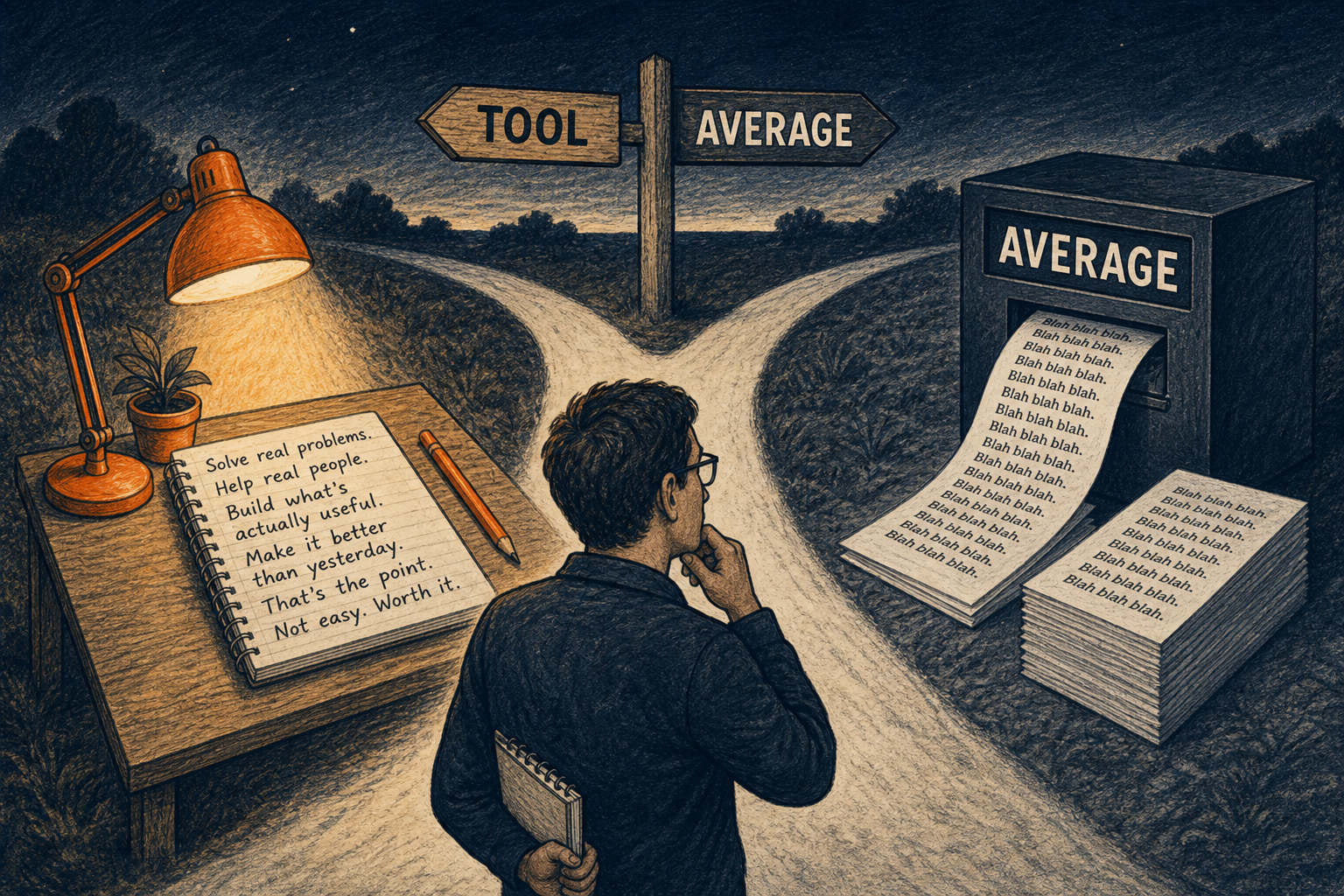
My spiral goes toward catastrophe. More things that can go wrong. The model’s fill-in goes toward the average — the most typical next thing, the mean of what it has seen. Same intolerance of a blank. Different destination. That is why AI writing can feel competent and dead. Averaged until the warmth is gone.
Scripts From a Personal Corpus
Autism and ADHD work the same way in my social life. I do not get the cues a lot of people seem to get for free. So my mind fills the blank from past experience — last time, what usually works, the script that has kept me out of trouble.
Masking is me generating the likely “correct” social move from that corpus. When the corpus is wrong for this room, I guess. Sometimes the guess is technically right and personally hollow. That is the same flavor as AI slop: a plausible sentence with nobody home.
I am not saying AI is autistic. I am not saying a model feels anxiety. I am saying I recognize the failure mode because I live a version of it.
Vague In, Average Out
Understanding that is how you make the tool better, and how you use it without getting used by it.
If you leave out data, it fills with the most average answer possible. Do that over and over and you get output that feels impersonal, because it has been averaged until any personalization is gone. The AI 101 series I wrote for Ethyx puts it as a habit: vague in, average out. Every gap you leave gets filled with the most typical guess. Hand over the real thing — your voice, your constraints, your facts — or you will get the mean of the internet wearing a confident tone.
Good Uses Are Not the Default
There are good uses. I am not performing balance when I say that. Thinking with a tool. Drafting when you already know what you mean. Exploring a question you will actually check. Accessibility. Catching what a tired or overloaded brain misses. Those are real.
They are not automatic.
The difference is usually whether you still have work to do after it answers. Good: you already know what you mean, and you use the model to get a draft on the page, then you rewrite it until it sounds like you. Good: you are stuck at 2am and you need a way to think out loud that will not judge you, and then you check the parts that matter. Bad: you ask it for the answer in a domain you will not verify, then paste the confidence. Bad: you let it write the email, the essay, the decision — and you stop being able to tell where you ended and the average began.
Markets and hype will not pick the good uses for us. The default is the crutch and the black box, because those are easier. If we do not use the good cases on purpose and limit the bad ones, we lose the plot. AI can destroy us that way. Not Skynet. Us, handing judgment to a box we refuse to understand.
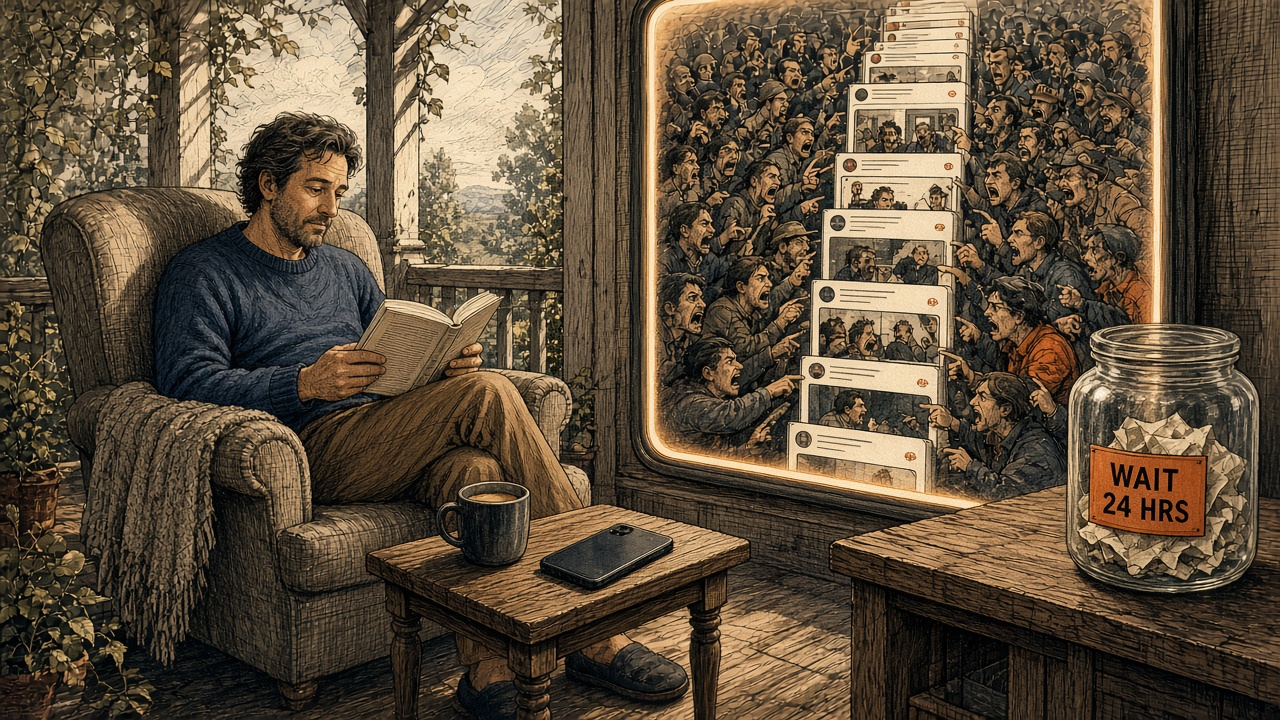
Think with it. Do not let it think for you. It is a good rubber duck and a bad priest. Put it down when the blank in front of you is a judgment, a fact you cannot check, or a person you should be talking to instead.
The Bill
Liking the tool does not cancel the costs. I work on this stuff. Skipping this section would be the opposite of the honesty I ask of this site.
Environment. Training and running these systems burns electricity and water at data-center scale. The chat window is free. The grid is not. The IEA estimated data centres used about 415 terawatt-hours in 2024 — around 1.5 percent of global electricity — and projected that demand more than doubling by 2030, with AI as the main driver. Cooling still drinks from local water systems. I am not going to pretend my next average completion is carbon-neutral. Waste completions are not only bad writing. They are waste.
Misuse. The bad uses are already here. Treating a guess as proof. Fraud. Surveillance that inverts the presumption of innocence — I wrote about that with Flock cameras. You do not need a future tense for this paragraph.
Unemployment. Displacement is real and uneven. Some tasks go away. New ones appear. The people who lose are not the people who profit. “Everyone will just retrain” is not a plan. Neither is the sermon that work becomes a hobby while scarcity ends. Fair is not apocalyptic. Fair is admitting the transition is a political problem, not a vibe.
Privacy. What you type is not a diary. Logging, training, third-party access — that is the quiet half of the black box. The habits for not handing over your life are in Part 5 of AI 101. The stakes belong here: a tool that fills blanks will fill them with whatever you put in the box. Do not put in what you cannot afford to have completed later.
Literacy Is the Condition
I do not need AI to be magic. I need it to be understood.
AI 101 is the practical companion to this essay: what you are actually talking to, what to use it for, how to ask so you do not get the average, when it makes things up, and what happens to what you type.
The fork is not “use it” versus “ban it.” The fork is literacy versus the crutch. If we know how it works, where it fails, and when to put it down, it can enhance us. If we do not, we will keep filling in the blanks — and calling the fill-in a future.