In The Cost of Heat I said there was another cage, inverted: the babyface who has to be the golden boy everywhere, who cannot have a bad night in public either. This is that essay.
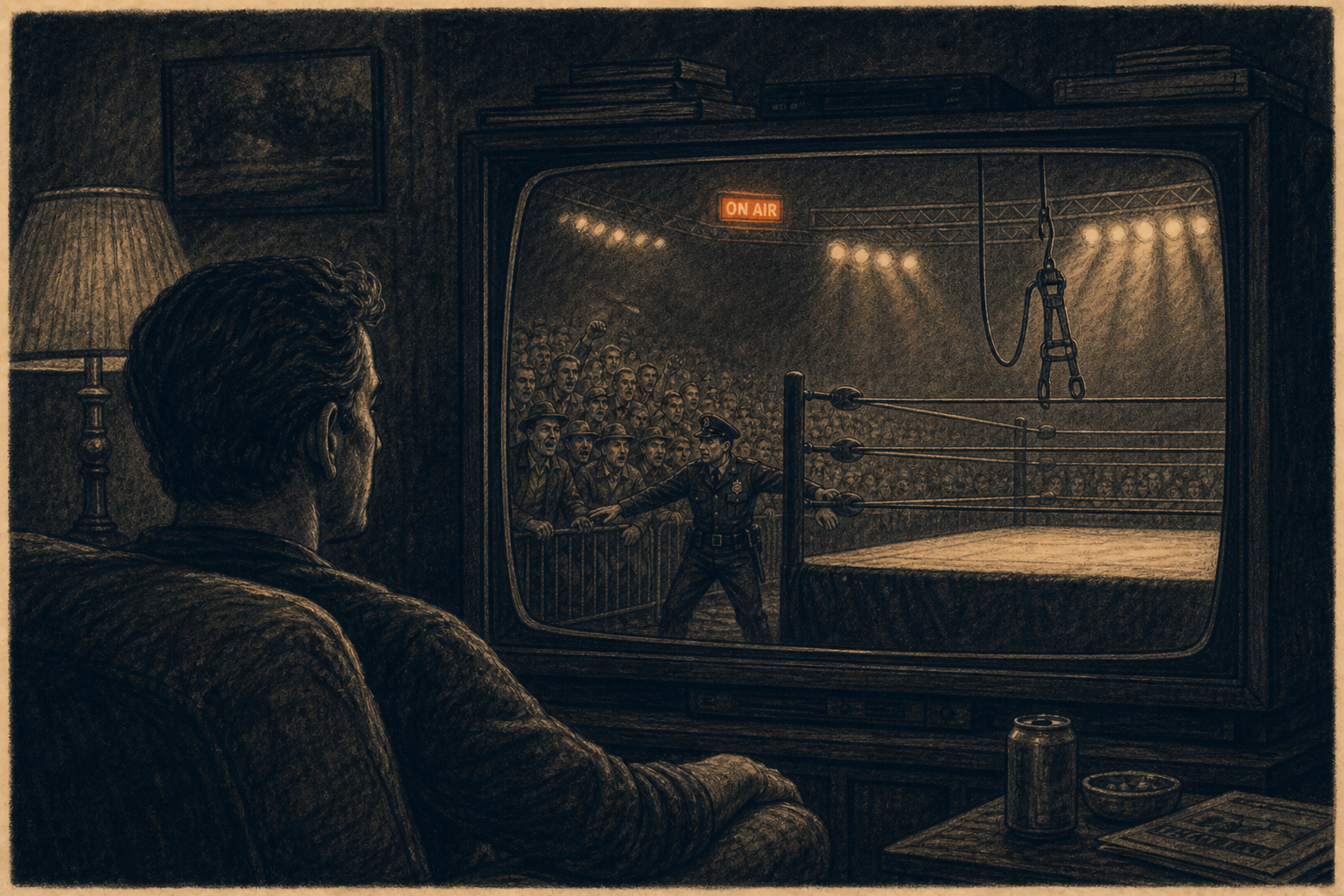
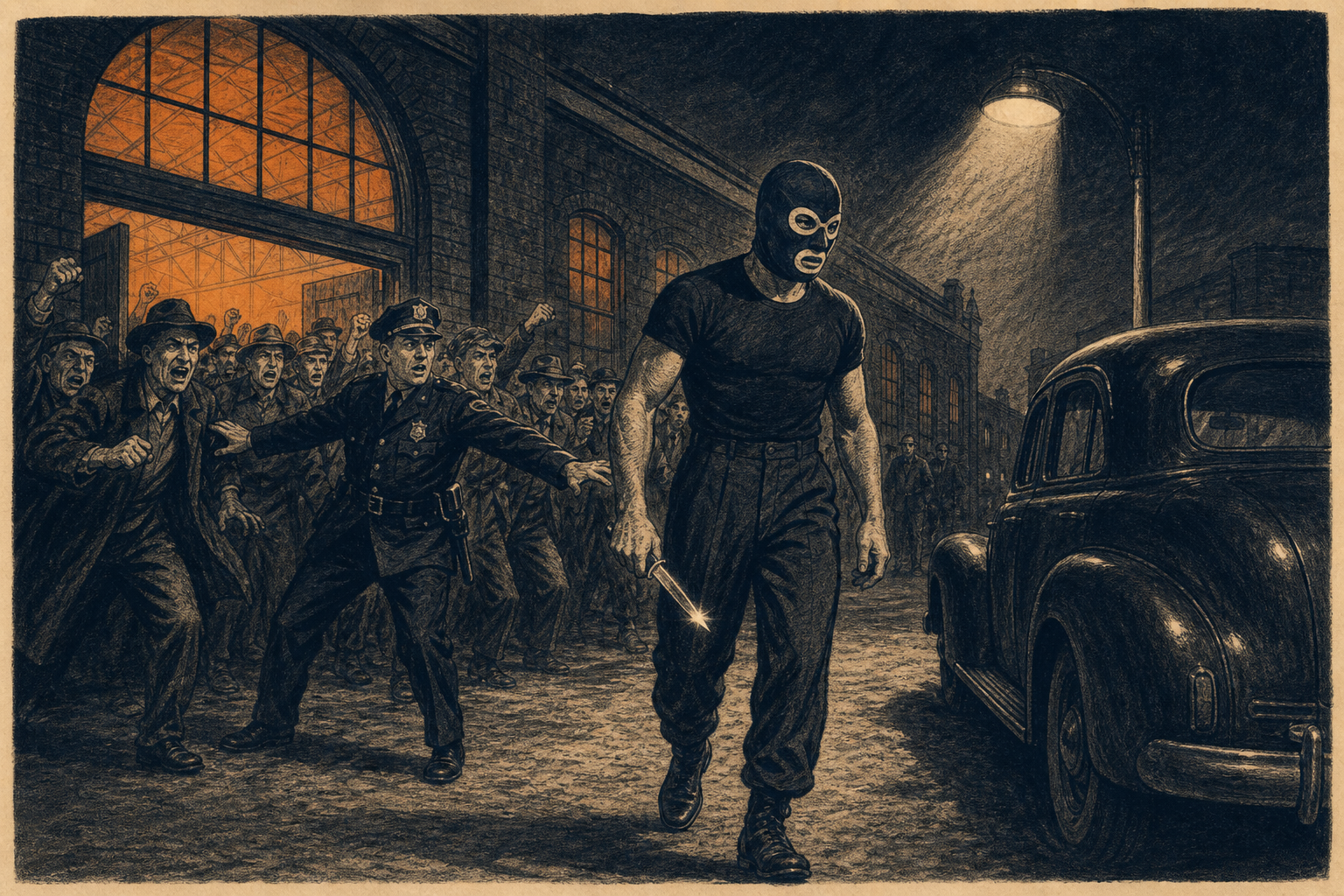
The heel’s bill is danger on the walk to the car. The face’s bill is never being allowed to take the halo off. Same engine I wrote about in The Lost Art of Professional Wrestling: people pay to see the bad guy get his ass kicked. That only works if they believe the good guy. The office then needs that man to stay good in the grocery store, the airport, the church, the bar. The job is to be believed. It is not to be known. They love the halo. The face under it is a liability if it shows.
It must be a hard thing to carry. Temptation is ordinary. Being human is ordinary. Being billed as almost superhumanly good is not. A slip is not only a private failure. In kayfabe it is a hole in the product.
A Bad Day at the Register
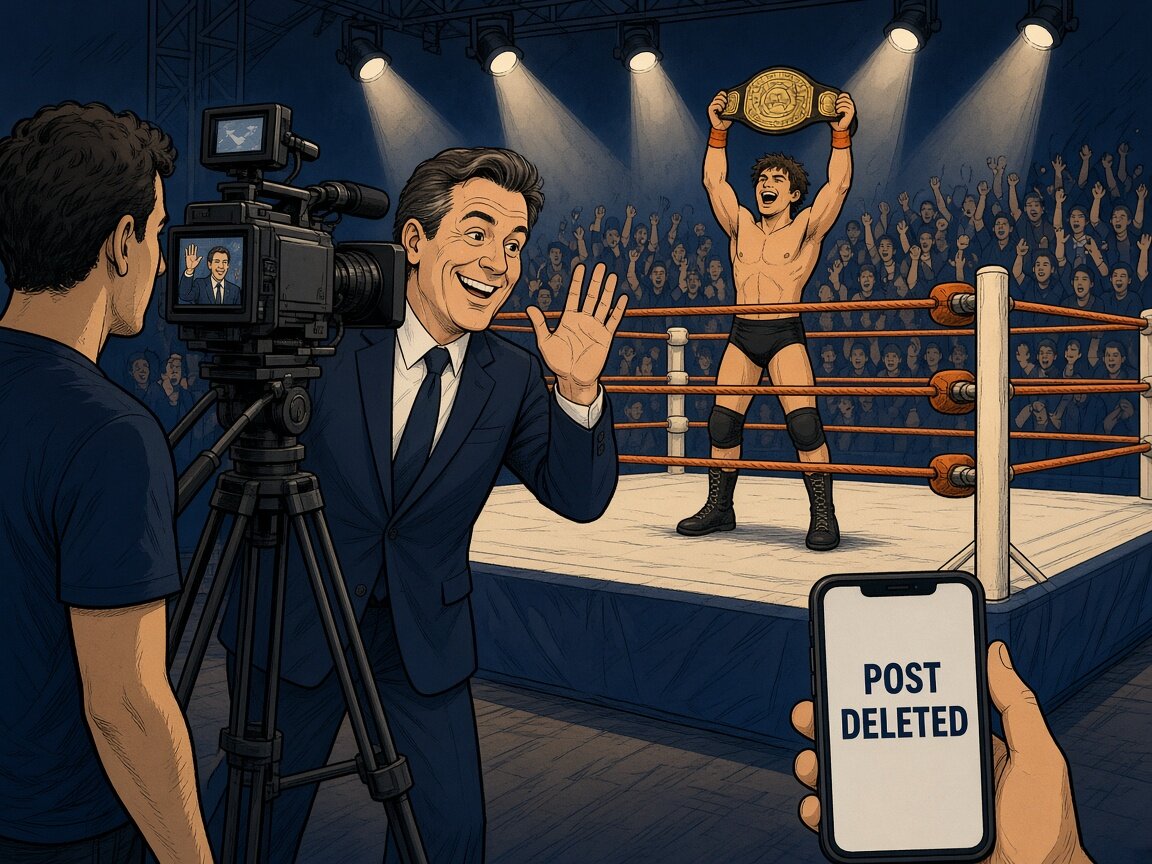
Heels, the Starz show, says the rule in one room. Season one, episode one. Ace Spade is the Duffy babyface — the young good-looking upstart the town cheers. After church he stops at the convenience store with Big Jim. The cashier is Helen. She is a family friend. She does not call the cops when he steals gum, because his father was good to her people. She catches him anyway. He is cruel to her. She says Tom would be ashamed. He hits back with a childhood insult and leaves the register uglier than he found it.
Sit with that. Two things are doing different work. The gum is nothing. The cruelty is the tell. Ace is the hero in the building and a jerk at the counter. The show is about that gap. Creator Michael Waldron put it plainly: Ace is the good guy in the ring and maybe not such a great guy outside of it.
The essay’s point is the rule he breaks. A babyface does not get to have a bad day. The town met him as the good guy first. Once they have, the register is part of the match. You cannot steal the gum and keep the halo. You cannot snap at Helen and stay the man they paid to believe. The product followed him out of the building. It was waiting at the counter.
I am not going to recap the series. One room is enough. The rest of this is about men who had to live under that rule for real.
The Company Marriage
John Cena is the modern national version. Hustle. Loyalty. Respect. The PG-era franchise. The man who never seemed to have a photographed bad night. Make-A-Wish made him the most requested celebrity in the foundation’s history and, by 2022, the record-holder for wishes granted. Guinness called the number herculean. Kids asked for him. He dropped everything and showed up as the man on the poster.
That is not a cheap shot. The wishes were real. The schedule was real. The brand needed both. Millions loved John Cena. The office needed them to keep loving the same man in the airport as in the ring. An ordinary human night — a drink, a fight, a bad photograph — would have put a dent in the product that national television could not buff out. The cage was a brand, not a church picnic. The bar was the same.
He has said what it cost, in his own words, without asking anyone to feel sorry for him. On a radio show after his first marriage ended, he said he had made WWE his absolute life. He did not have a family. He had tried marriage once and realized the WWE marriage was the one that was going to survive. The first marriage, to Elizabeth Huberdeau, ended in 2012. Years later, on Stephanie McMahon’s podcast, he told the 2008 version of the same fact. Dinner with his then-wife. A call from the office. A plane waiting. He threw some cash on the table and left. He does not regret it. He said he did it under his own duress. He also said a 2013 schedule would destroy him now, and ruin the marriage he is in.
He has said no to kids in public, more than once, and not as a bit. On Club Shay Shay he told Shannon Sharpe he does not want them — that he is driven, often stubborn and selfish, and does not think he will ever invest the time it takes to be a great parent. He wants to live the life in front of him. That is his sentence, not a diagnosis. I am not going to turn it into one. The point is the golden boy the building loved was a man who had already decided how much of himself the job could take. The man who got to come home, when he got to come home, is not the man they cheered.
It is easy to call that selfish. It is easier if you have never been asked to be a superhero on a Tuesday in an airport. Cena cleared a bar most people never have to see. The sympathy is not that he suffered more than a heel in a parking lot. The sympathy is that he had to stay good, everywhere, for years, while remaining a person. Those are not the same job.
The Texas Saints
The Von Erichs had this in a different room, and maybe a harder one. 1980s Texas. World Class. The Sportatorium on a Friday night, tin building, no air conditioning, Ted Nugent on the way to the ring. For a few years they were bigger than the Cowboys. In 1984 they drew about 41,000 to Texas Stadium. Wrestling magazines named Kerry more popular than Hulk Hogan. They were billed as the good ol’ God-fearing boys — clean-living, born-again, hometown heroes. The Fabulous Freebirds were the foil: beer, cheat, outlaws from somewhere else. To fight a Von Erich was to fight Dallas.
Fritz ran the office and the myth. The boys did not drink in public. They delivered testimonies with enough conviction that people came to the altar. They married young and pretended they had not, so the teenage girls who filled the Sportatorium would not have to share them. Jan Reid, writing in Texas Monthly, put the billing in one line: unbeatable, all-American, born-again kids. There was not much room for being merely human.
Kevin said the rest, in an unguarded moment Skip Hollandsworth caught for D Magazine in 1988. It stopped being a performance. It was not an act. They became the Von Erichs. They began to think they were everything the name represented.
Sit with that. The building loved the Von Erichs. The Adkissons had to stay hidden for the love to hold. Temptation was not a theory. The road, the pills, the women at the hotel door, the fame in a state that did not have rock stars the same way. Saying no was the job. It was not easy to say no. When they slipped, it cost them in a way a heel’s slip does not. A heel is supposed to be a problem. A face who becomes a problem is a hole in the town’s church-and-football story.
Kerry’s 1983 arrest at DFW is the clean example. He was coming home from Mexico in a karate outfit, got stopped at customs, and the papers said pills and powder. He was convicted of a marijuana misdemeanor. Reid writes that friends figured Fritz had pulled strings, and that fans believed the Freebirds had set him up. I am not going to mash those tellings into one. The useful fact is the third one. A human mistake left the airport and became kayfabe. The image did not break. It absorbed the charge and handed it to the heels. That is how badly the town needed them to stay good. It is also how little room the actual men had to be seen.
Kayfabe did not kill those boys. Reid was careful about that later, and I will be too. The curtain did not invent the pain. It shielded it. Nobody was supposed to see the Adkissons struggling, because the product was the Von Erichs winning. When the problems finally blew through the curtain, they blew through a family that had been told, for years, that the billed man was the real one. I do not need a courtroom verdict to say that kind of pressure is hard on a mind. Texas loved them. Almost nobody was allowed to know them.
The Man in the Rafters
Starrcade 1997. Sting had been in the rafters for a year. Black and white. Crow. Silent. The savior WCW had been pointing at while Hollywood Hogan ran the place. The loudest love in the building, and he was the farthest person from it. The gimmick was isolation. Sit in the dark above the people who need you. Do not speak. Do not come down until the office says the world is ending.
On December 28, in Washington, he came down. He was on top of the wrestling world. Eric Bischoff, years later, said Sting showed up half there — that the silence was not only the character, that Steve Borden’s head was not in the game, that personal trouble had been running under the paint. That is one telling, from the man who booked the night. I am not going to make it the official finish. Bischoff has his reasons. Sting has his. The gap is the point.
Sting told the rest himself, in The Players’ Tribune, without asking to be rescued. A few months after Starrcade they put him on a rope under a helicopter for a Spring Break Nitro. He rappelled into the ring as a real-life superhero. No stunt double. No CGI. Ten thousand people looking up. He felt like he was wearing the cape. He had money. He had fame. He had a family at home. He had every earthly thing. He was miserable. Spiritually empty. On the edge of a breakdown. An addict. The only time he was sober was when he was doing the job. The other twenty hours: painkillers, muscle relaxers, booze.
He went back to the hotel after the backslaps and the ratings talk. He looked in the bathroom mirror and asked himself why he could not stop, why he felt so empty. Later he would look at pictures from that era and say the hopelessness in the eyes was not an act. It was not a character. He was lost. He would paint the last black line, say it’s showtime, become Sting, give the building everything, and step back through the curtain into the same cycle.
I keep coming back to that year in the rafters. How much of the Crow was work. How much was a man who could not come down, billed as the hero of the company while he knew, in the parts of the day the cameras did not buy, that he was an imperfect human being. The love was loud. It was for Sting. Steve was upstairs. That is a lonely place to sit, even when the whole building is looking at you.
The Bill
Heat follows the heel home as permission to touch him. The halo follows the face home as a standard he cannot meet and cannot put down. Ace at the register is the small version of the same fact. Cena’s plane is the corporate version. The Von Erichs’ airport is the civic one. Sting’s rafters are the spiritual one. Different rooms. Same cage.
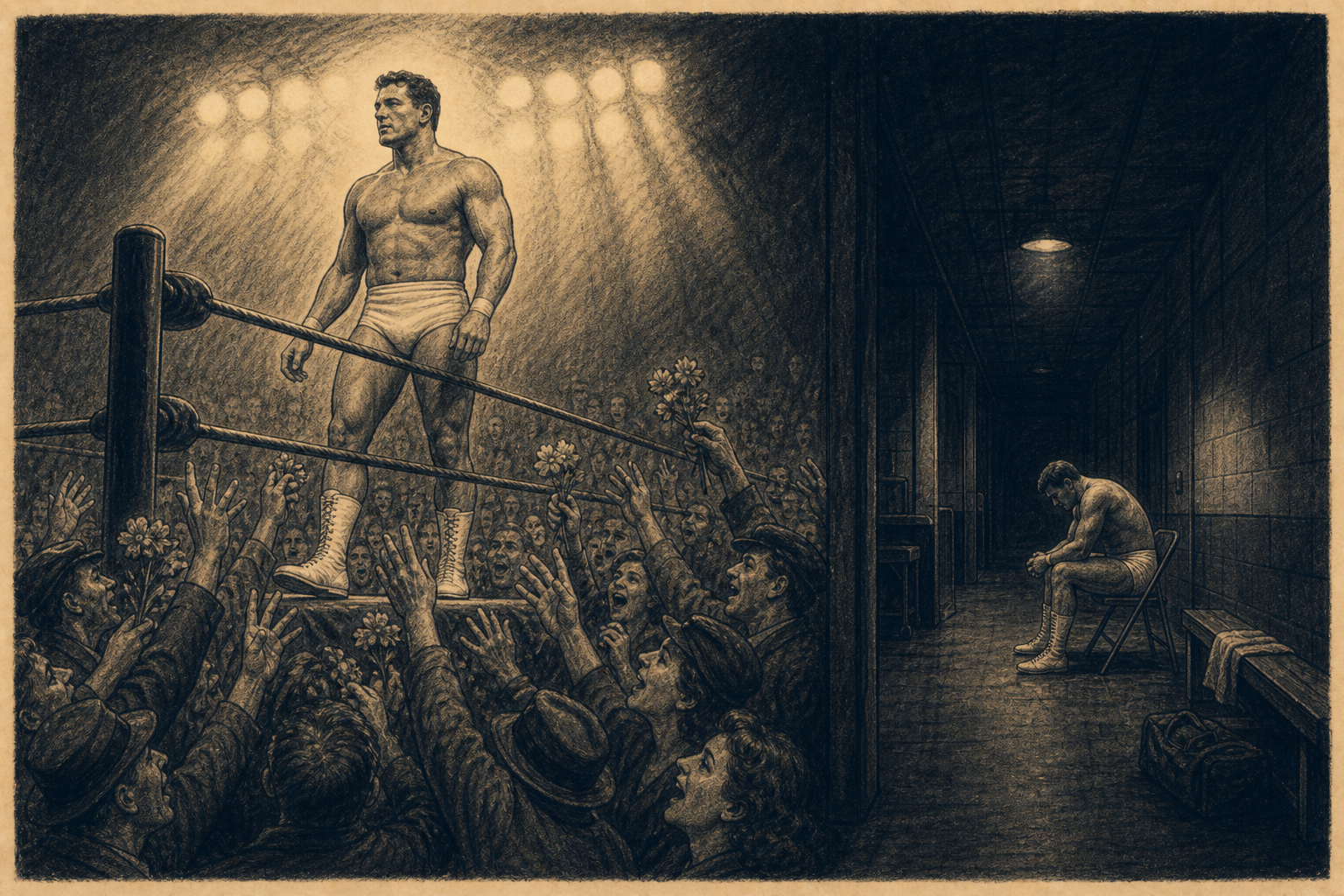
I am not ranking who suffered more. I am not arguing that faces should be allowed to drink on camera. The old discipline drew money because people believed. Belief has a price. For the man in the hood it was the walk to the sedan. For the man in the white boots it is this: the building is allowed to love you as if you were better than a person, and you are not allowed to show them you are one.
It must be hard to be loved by so many. And for no one to know who you are.
That is what the halo costs.
Further Reading
- Heels, Season 1, Episode 1 — “Kayfabe” (Starz, 2021)
- TheWrap — Michael Waldron on Jack, Ace, and who is the babyface outside the ring
- Men’s Health — Cena on the first marriage and the WWE marriage
- SEScoops — Cena on the 2008 dinner, the plane, and a 2013 schedule
- Club Shay Shay — Cena on not wanting kids
- Guinness World Records — Cena and Make-A-Wish
- Skip Hollandsworth — “The Fall of the House of Von Erich” (D Magazine, 1988)
- Jan Reid — “Six Brothers” (Texas Monthly)
- Sting — “The Man They Call Sting” (The Players’ Tribune, 2022)
- Wrestling Inc — Bischoff on Sting at Starrcade 1997
- The Cost of Heat
- The Lost Art of Professional Wrestling