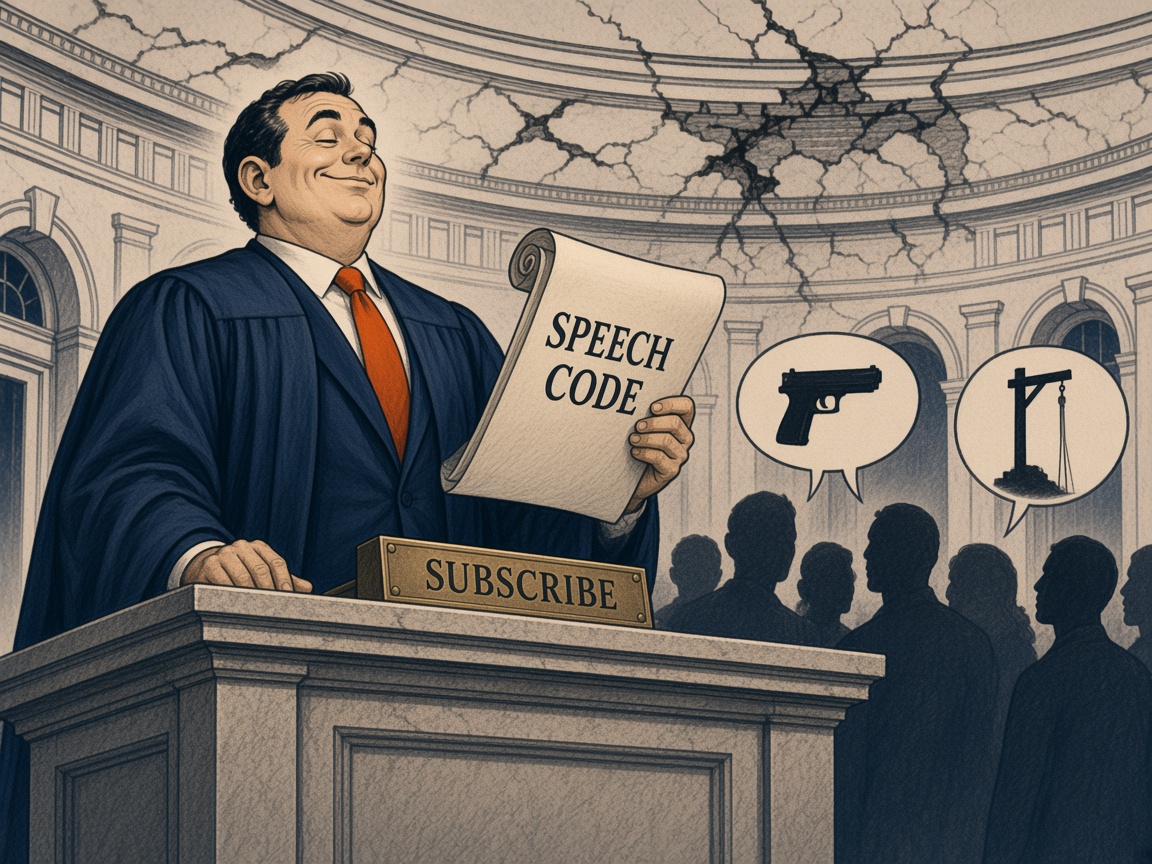
In part one I argued the Overton window moved right, not left — and that the party still selling Goldwater dropped his budget rule, his trade stance, and his character standard. In part two I argued churches got used: the SBC’s early-1970s abortion middle ground was rewritten into a wedge, and Weyrich’s organizers needed a mobilizing issue after other triggers failed.
This essay is the test. If the thesis that right-wing government delivers for middle- and lower-class people were right, we would be feeling relief. Absolute poverty is not 1933 — do not say “more than ever.” Say this: housing, healthcare, and education costs outran wages for a huge share of households; wealth of the top is a record share; peer democracies built floors we never did. Failure is the indictment. Malice is only claimed where someone said the quiet part.
The International Lag
The United States is the only high-income OECD country without a national paid parental leave entitlement. The Family and Medical Leave Act is unpaid and only covers larger employers. There is no federal paid sick leave guarantee; among OECD peers, the United States and Korea are the holdouts on statutory paid sick leave. At-will employment rules in forty-nine states mean most workers can be fired for almost any reason that is not illegally discriminatory.
Every other rich democracy has a statutory path to universal health coverage — NHS-style, social insurance, or Swiss/Dutch-style mandated private insurance with a public backstop. The United States still does not. The ACA reduced the uninsured. It did not close the gap. We spend roughly 17–18 percent of GDP on healthcare with worse access than peers who spend less.
Firearm death rates among high-income peers are not close. CDC and WHO comparisons in the mid-2010s put overall U.S. firearm mortality on the order of eleven times the high-income average. UNODC data for 2023 put U.S. firearm homicide around 4.4 per 100,000 against Canada at about 0.7. Other developed countries ridicule the gap because the gap is real.
These are not vibes. They are the peer-country receipts of a politics that treated guaranteed floors as socialism and then wondered why the middle feels unprotected.

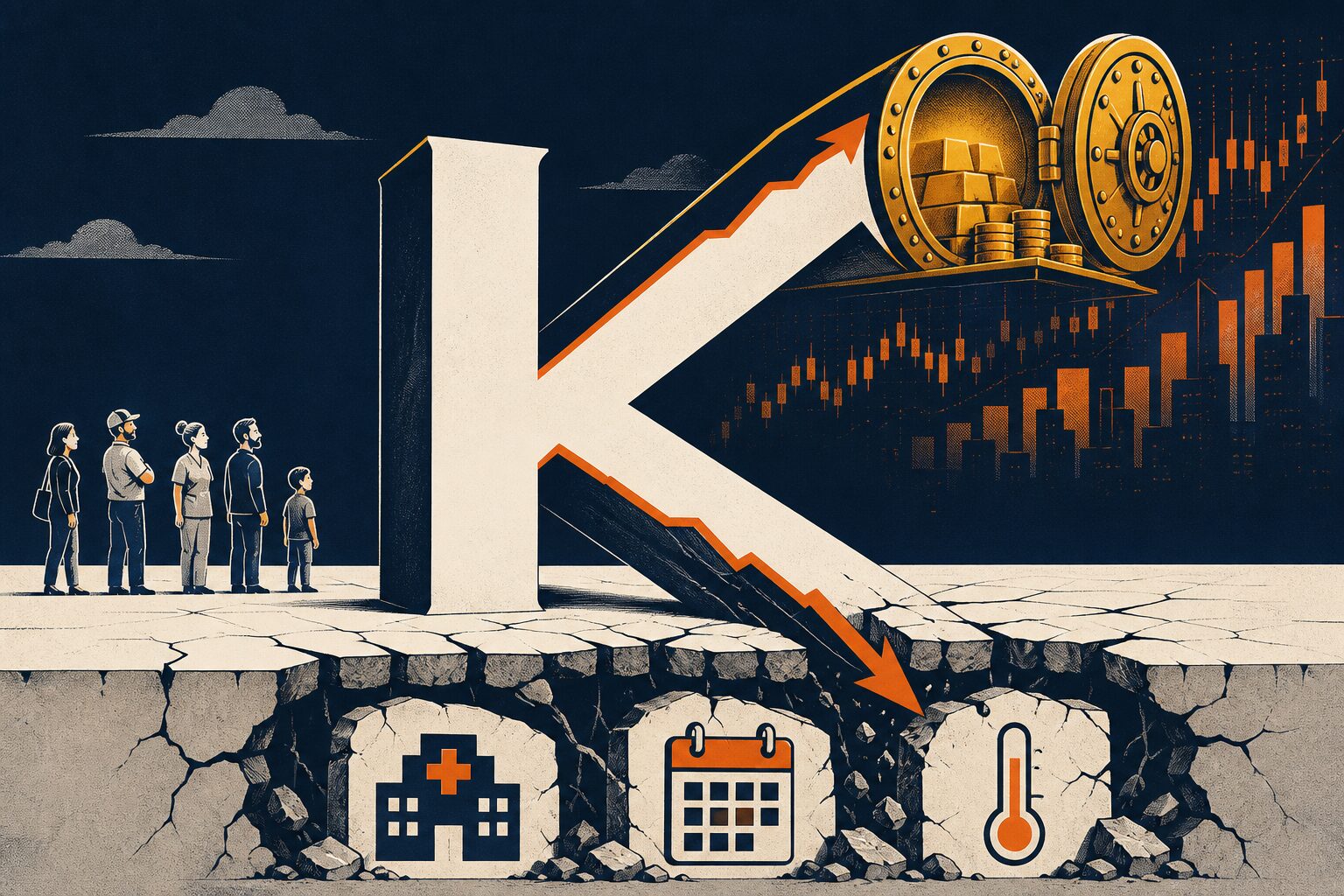
The K
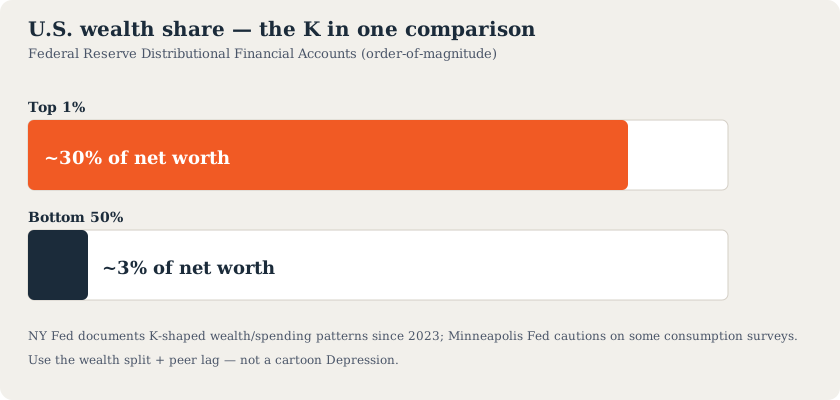
Federal Reserve Distributional Financial Accounts: the top 1 percent hold on the order of 30 percent of net worth; the bottom half holds a few percent. U.S. Bank and others have flagged Gini and wealth concentration near multi-decade extremes. The New York Fed’s Liberty Street Economics work documents K-shaped patterns in wealth and spending since 2023 — higher-income households pulling away as financial assets compound. The Minneapolis Fed has cautioned that some consumption surveys are messier than the headline K story. Fine. Use the wealth split and the peer lag. Do not invent a cartoon Depression.
A politics that cut top rates, starved labor power, and blocked peer-country floors while asset owners rode markets was always going to produce a letter that looks like K. The brochure said the middle would thrive. The top thrived.
The Fiscal Ladder as Receipts
Goldwater: spending cuts before tax cuts. Then the ladder from part one, now as outcomes:
- Reagan broke spend-first. Debt held by the public: about 26.2 percent of GDP (1980) to 40.9 percent (1988). Stockman’s Trojan horse admission is contemporaneous branding, not mind-reading Goldwater.
- George H.W. Bush tried to close the hole with the 1990 tax deal and was punished. Debt/GDP kept rising.
- George W. Bush inherited a surplus path. CRS: legislative changes (tax cuts, wars, Medicare Part D) were about two-thirds of the surplus-to-deficit swing. Unpaid wars plus unpaid tax cuts plus a new entitlement.
- Clinton produced surpluses — the control case so this is not “all presidents.”
- Trump made the violation the program. CBO February 2026 outlook: deficit about $1.9 trillion / 5.8 percent of GDP; the 2025 reconciliation extension scored as adding roughly $4.7 trillion to deficits over ten years.
CRS and CBO have long been clear that major supply-side cuts did not pay for themselves. George H.W. Bush called it voodoo before he inherited the bill. The people who still sell trickle-down as middle-class policy are selling a brand Stockman already admitted was hard to sell under its real name.
War on Drugs — Argue from Outcomes
Nixon declared a war on drugs in 1971. Treat the outcome as the argument: mass incarceration, racial disparity in enforcement, supply not crushed. The 1994 crime bill under Clinton is part of the same punitive turn — this is not a one-party cartoon.
Do not hang the Ehrlichman “we knew we were lying” quote as load-bearing. Dan Baum published it in Harper’s in 2016 from a 1994 recollection; Ehrlichman’s family and some historians contest it; Nixon also expanded methadone and treatment tracks that later administrations stripped. We can say the war failed, and that it was politically useful, without claiming a signed confession.
Militarism as Cost Without a Social Contract
Vietnam was Kennedy and Johnson, then Nixon. Iraq 2003 was GOP-led with Democratic votes. Do not date “bipartisan forever wars” to Goldwater. Put them here as cost: trillions spent projecting power abroad while peer countries built healthcare and leave floors at home. A country can choose guns. It chose guns and told the middle that peer-country social insurance was unaffordable socialism. That is the cake-and-eat-it move.
Gridlock as Feature
Mann and Ornstein’s point was never that Congress is merely “polarized.” It was that asymmetric polarization plus institutional hardball turns the system into a machine that blocks the floors above while tax cuts and judges still move. Gridlock is not a bug when your coalition wins by stopping peer-country policy and calling the stop a win.
Who Got Paid, Who Got the Brochure
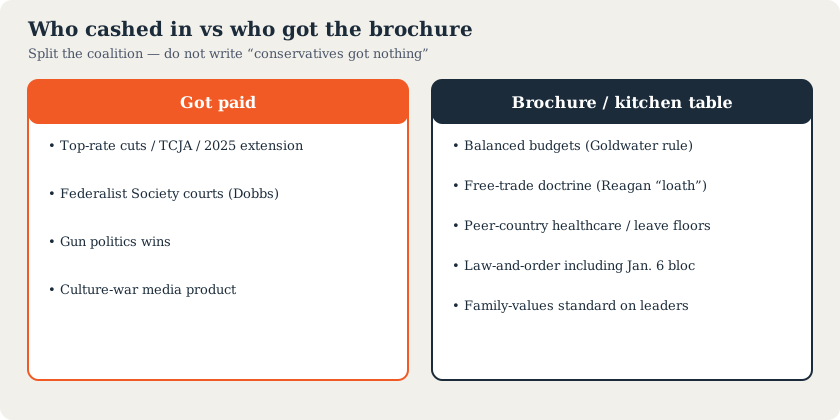
Donors and the business wing got rate cuts. The Federalist Society got the courts. Gun politics got its wins. Culture-war media got a product that never has to balance a budget. Working-class Republicans who were sold wages, dignity, and cheaper goods got tariffs that tax groceries, asset inflation they do not own, and no sick leave. Goldwaterites who wanted balanced books, free trade, and character got none of those from the heir who still wraps himself in the brand.
Evangelicals got Dobbs and a leader who fails the test they used on Clinton. That bargain is part two.
The Dual Loss
The country shifted right. Brochure conservatives did not get the limited-government, balanced-budget, law-and-order party they were told they had — while donors and courts did. The remaining question, asked without contempt in part one, is why the rest of the coalition treats someone else’s win as theirs: negative partisanship, sorted identity, a Fox-and-feed diet, status and recognition, the two-party trap, and the fear of being the odd one out.
If the rightward bet worked for the people it claimed to serve, the middle would not be one illness or one firing from the edge while the top 1 percent compounds. We would see peer-country floors. We would see broad relief.
We see a K.
That is enough. You do not need every originator to have been malicious. You need the ledger. The ledger is not subtle.
Sources
OECD / peer-country floors:
- OECD Family Database PF2.1 Parental leave systems
- Contagion Nation 2020: United States Still the Only Wealthy Nation without Paid Sick Leave (CEPR)
- Commonwealth Fund / OECD health spending and access comparisons
- CDC / WHO firearm mortality comparisons; UNODC firearm homicide rates
Wealth and K-shape:
- Federal Reserve Distributional Financial Accounts
- Explaining the K-Shaped Economy (NY Fed Liberty Street Economics)
- The K-Shaped Economy in 2026 (U.S. Bank)
- Have U.S. consumers gone “K-shaped”? (Minneapolis Fed)
Fiscal ladder:
- The Budget and Economic Outlook: 2026 to 2036 (CBO)
- William Greider, The Education of David Stockman (The Atlantic, Dec. 1981)
- CRS RS22550 / R41134 on the 2001–09 surplus-to-deficit swing
- Tax Policy Center / Treasury historical debt-to-GDP series
War on Drugs / crime:
- Nixon 1971 drug-war declaration
- Dan Baum, Legalize It All (Harper’s, 2016) — contested Ehrlichman recollection; flag as such
- 1994 Violent Crime Control and Law Enforcement Act (Clinton)
Series: